Engineering approach
Improve the architecture.
Preserve what works.
We use business goals, operational evidence, and domain understanding to decide what needs to change. That may mean clarifying ownership, refactoring a difficult dependency, improving configuration, or replacing a component whose constraints justify it.
Diagnose before prescribing
The starting point is the problem you are experiencing—not a preferred technology stack. Before recommending a change, we look for evidence that explains the constraint: a representative change from request to release, critical user journeys, repeated incidents, performance and capacity information, infrastructure costs, dependencies between teams or components, and ownership or operational limits.
Scope and baseline are agreed with you. When evidence is thin, we identify the measurements needed before committing to a major change. Detailed starting points for delivery, scalability, cost, and AI workflows are described on their own pages rather than duplicated here.
Delivery review Scalability assessment Cloud cost review AI workflow assessment
Make boundaries and ownership explicit
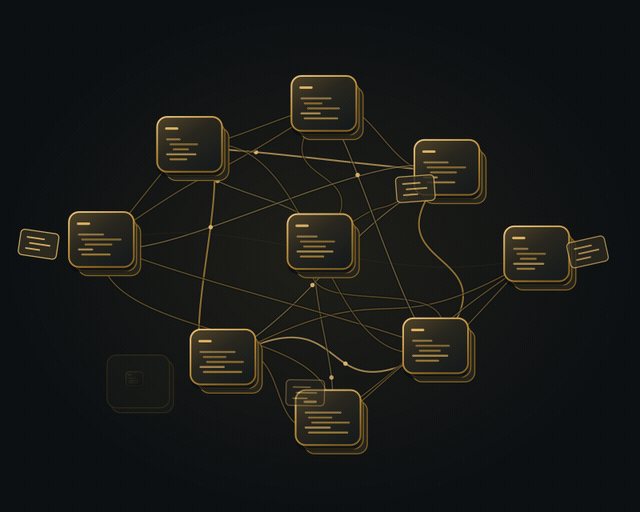
When change is expensive because responsibilities blur, clarifying boundaries often matters more than introducing new technology. Domain-Driven Design is one useful discipline for that work when the domain is complex enough to justify it—not a mandatory ceremony for every project.

Bounded contexts
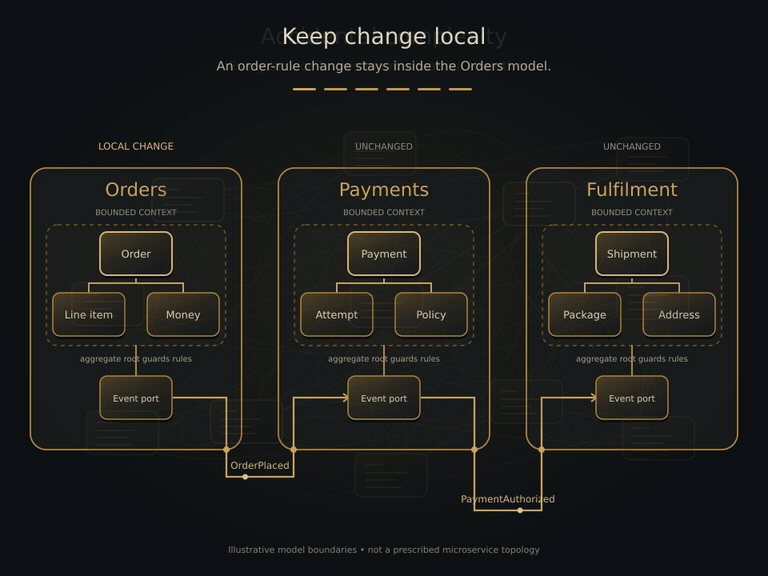
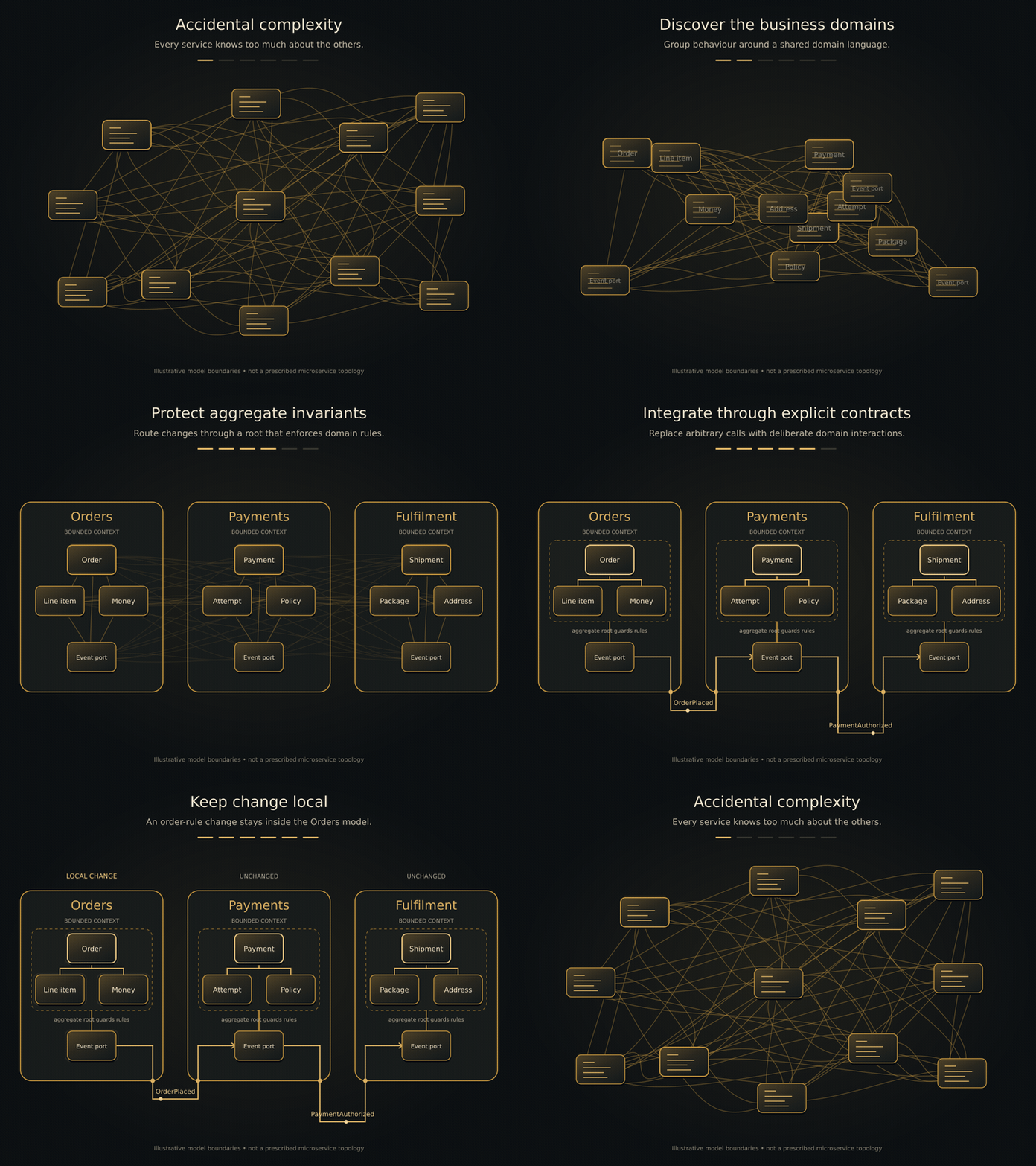
A bounded context defines where a particular domain model and vocabulary apply. Clear boundaries help teams reason about responsibilities and interactions. That does not require every context to have its own deployment, microservice, or database. A modular monolith and independently deployed services can both express appropriate boundaries when the contracts are deliberate.
Shared language
Business and engineering teams need consistent terms within a context. The model and vocabulary should evolve as understanding changes. Different contexts may use different models—one universal language across the whole business is rarely the goal.
Strategic design
Distinguishing core, supporting, and generic capabilities helps direct engineering attention where it matters most. Clearer contracts and ownership also make dependencies manageable. Fewer lines on a diagram are not, by themselves, proof of architectural quality.
Choose the smallest justified intervention
We select an intervention from the evidence and the business constraint—not from a predetermined destination such as a rewrite or a microservices migration. Retaining a component can be the right answer.
| Situation | Possible intervention | What must be checked |
|---|---|---|
| The component meets its needs; change offers little benefit | Retain and monitor | Operational signals, ownership, and review triggers |
| Settings, queries, caching, or capacity drive the problem | Reconfigure or optimize | Utilization evidence, reliability impact, rollback path |
| Internal structure impedes change while behaviour can stay | Refactor | Behavioural coverage, coupling hotspots, incremental cut points |
| Ownership, coupling, or cross-team hand-offs are the constraint | Adjust boundaries or interfaces | Contracts, data ownership, and migration of callers |
| Further modification costs more than a focused rebuild | Replace a component | Compatibility boundary, data migration, cutover criteria |
| Multiple contexts share a proven, exceptional case for large change | Broader rewrite | Clear rationale, alternatives assessed, staged migration plan |
Java-version upgrades, cloud moves, or monolith-to-services conversions are not automatic evidence that replacement is required. The proposed change is described by its actual scope—not by a label that implies inevitability.
Change safely and validate outcomes
Practices are selected for the system in front of us. Common options include establishing expected behaviour, contract and functional verification, incremental rollout, compatibility boundaries where needed, data validation when data changes, observability, rollback or recovery planning, and retiring old components only after agreed checks. Not every engagement uses every technique.
Outcomes should relate to the original constraint—for example reduced coordination for a representative change, improved reliability, capacity validated against agreed demand, or lower operating cost under a stated baseline. We do not invent measurements in advance; we agree how success will be judged.
Related delivery work appears in our client engagements when it is already described there.
Leave the team able to own the result
Handover is concrete: key architecture decisions, clear ownership, relevant operational guidance, known trade-offs and limitations, agreed validation results, and a practical list of remaining work. Commercial terms stay as published on the homepage; this page does not add new guarantees.